From electric cars to two- and three-wheelers, ZECONEX is focused on thoughtfully planned EV charging infrastructure designed around different vehicle categories, practical locations, and the evolving needs of electric mobility.
⚡DC Fast Charging (Cars)🛵2-Wheeler Infrastructure🚚3-Wheeler Commercial🏢Customer Amenities
CHARGING ECOSYSTEM CONCEPT
MULTI-VEHICLE HUB
OUR CHARGING ECOSYSTEM
Charging Solutions for Different Journeys.
Different vehicles, routes, and charging needs require different infrastructure approaches. ZECONEX's solutions framework considers a range of charging categories, with equipment and services determined by the requirements of each project.
01 // FOUR-WHEELER HIGH-POWER
DC Fast Charging for Cars
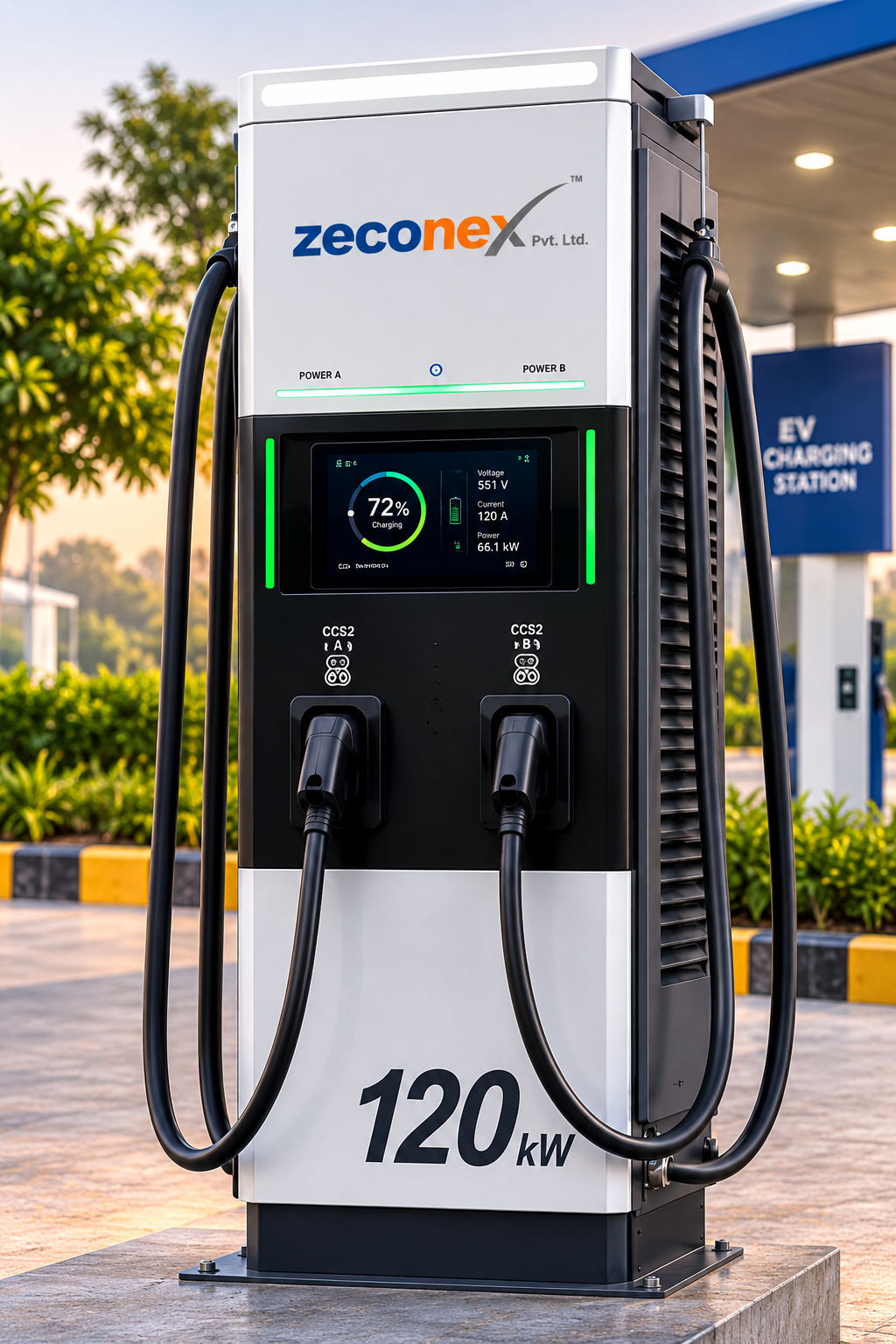
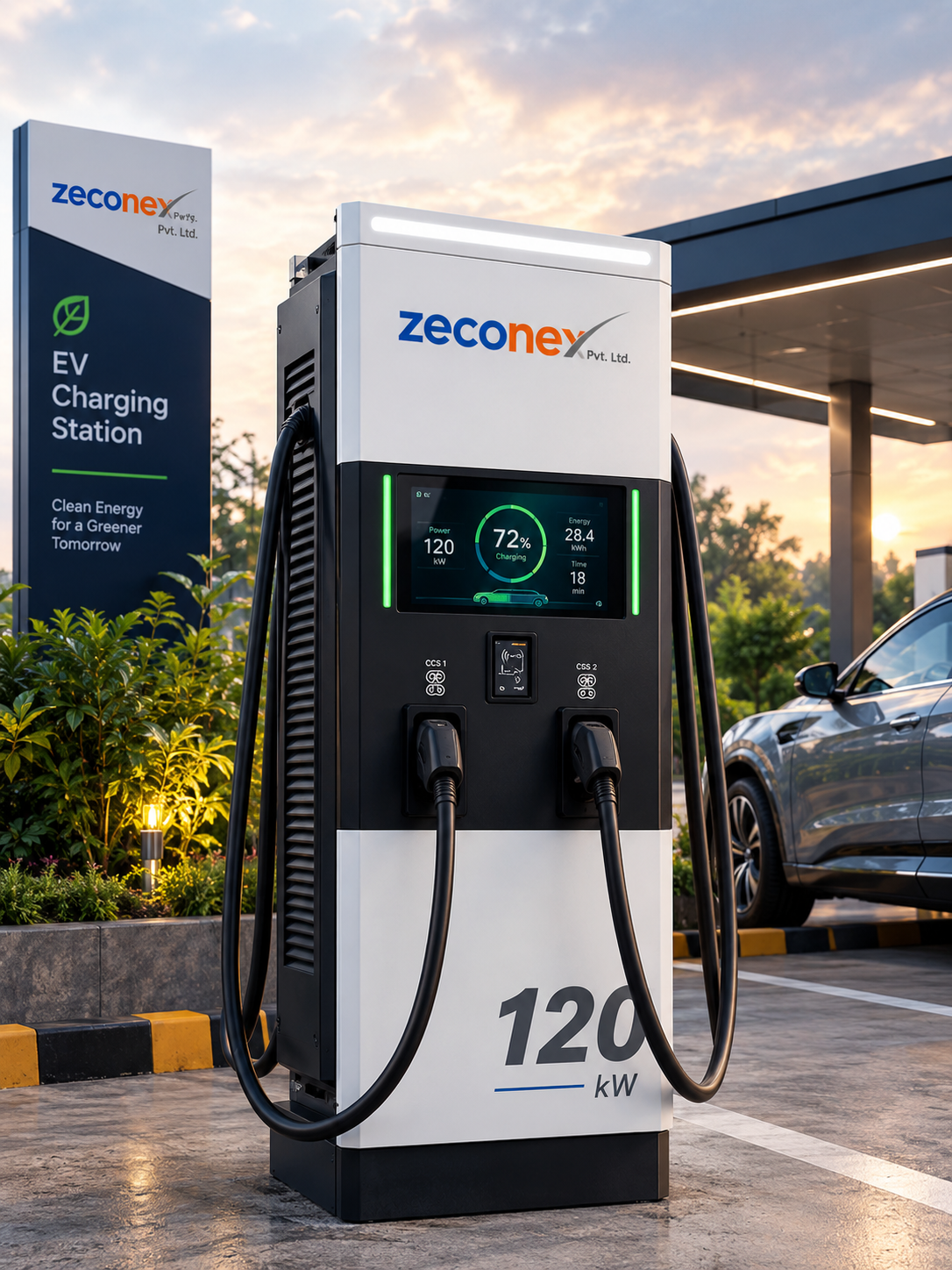
High-power direct current charging infrastructure engineered for compatible passenger electric cars. Our planned flagship project incorporates a 120 kW dual-gun fast charger and a 60 kW dual-gun charger to support highway motorists.
Unifying diverse charging needs under a single, thoughtfully planned hub layout. Featuring protective canopies, segregated vehicle bays, and balanced transformer allocation modeled after our proposed 204 kW Balugaon facility.
Flagship Specification: 204 kW Total Proposed Load
DC fast charging can support compatible electric cars that require higher-power charging. ZECONEX's infrastructure planning includes provisions for DC charging equipment intended for four-wheelers, subject to project implementation and equipment specifications.
⚡Higher-Power Charging Options
Plan charging infrastructure around appropriate power ratings and vehicle compatibility.
🛣Highway-Oriented Planning
Consider strategically located charging facilities that may support drivers travelling along important road corridors.
🔌Equipment Compatibility
Charging performance depends on the installed charger, connector, vehicle capabilities, battery conditions, and other operating factors.
120 KW DISPENSER
ACTIVE CHARGING
PLANNED CAR CHARGER SPECIFICATIONSVERIFY BEFORE LAUNCH
Planned DC Charger 01:
60 kW DC Fast Unit
Intended Category:
Four-Wheelers
Planned DC Charger 02:
120 kW DC Fast Unit
Intended Category:
Four-Wheelers
Combined Car Capacity:
180 kW Planned
Connector Standard:
CCS-2 Interoperable
Current Status:
Planned Project Configuration
PLANNED PROJECT CONFIGURATION — VERIFY BEFORE LAUNCH:
These chargers represent the proposed technical configuration for the Balugaon flagship station. They are not currently commissioned, operational, or publicly available.
02 / TWO-WHEELER MOBILITY
Charging for the Everyday Ride.
Electric two-wheelers play an important role in everyday mobility. Charging infrastructure planning can consider the needs of commuters, delivery riders, and other users who depend on electric scooters and motorcycles.
📍Practical Charging Locations
Explore charging-location concepts that may support everyday journeys and convenient stops.
▦Space-Conscious Planning
Consider layouts suitable for two-wheelers and the available space at each proposed site.
🔌Vehicle Compatibility
Charging arrangements must match the vehicle's supported charging method and equipment requirements.
PROJECT REFERENCE ALLOCATIONCOMBINED PROVISION
Equipment Allocation:
Four (4) 6 kW DC Units
Category Scope:
2W & 3W Combined
Total Allocation Power:
24 kW (4 × 6 kW)
Exclusivity:
Shared with 3-Wheelers
NOTE ON ALLOCATION:
The available project documentation identifies four planned 6 kW DC charging units grouped for two- and three-wheelers combined. They are not exclusively designated for two-wheelers.
03 / THREE-WHEELER MOBILITY
Supporting the Next Generation of Electric Three-Wheelers.
Electric three-wheelers can support a variety of passenger and goods-transport needs. Charging infrastructure planning should account for vehicle compatibility, operating patterns, location requirements, and suitable charging equipment.
🚚Designed Around Use Cases
Consider the practical needs of passenger and commercial three-wheelers.
⚡Suitable Charging Arrangements
Plan charging equipment according to vehicle requirements and the intended use of each facility.
➥Convenient Site Layouts
Consider access, maneuvering space, and safe movement around charging areas.
PROJECT REFERENCE ALLOCATIONSHARED PROVISION
Planned Shared Units:
Four (4) 6 kW DC Units
Total Shared Capacity:
24 kW Combined
Target Vehicles:
Two- & Three-Wheelers
Allocation Ratio:
Subject to Confirmation
NOTE ON ALLOCATION:
Planned shared charging provision consists of four 6 kW DC units for two- and three-wheelers combined. The precise operational division between vehicle categories has not been confirmed in the available project documentation.
04 / INTEGRATED CHARGING INFRASTRUCTURE
One Charging Hub. Different Mobility Needs.
A thoughtfully planned charging hub can bring together different charging requirements within a coordinated site layout. ZECONEX's infrastructure approach considers the relationship between equipment, vehicle categories, access, and the overall user experience.
Multiple Vehicle Categories
Plan for compatible vehicle categories based on the charging equipment and project requirements.
Coordinated Site Layout
Consider charger placement, vehicle movement, access routes, and available space.
Scalable Infrastructure
Plan electrical and physical infrastructure with the project's requirements and potential future development in mind.
Customer-Focused Planning
Consider how drivers enter, access charging equipment, and leave the facility safely.
BALUGAON FLAGSHIP SITE BLUEPRINT (PROPOSED 204 kW)
Click or tap any zone to inspect equipment allocation and planning details.
CONCEPTUAL SITE DIAGRAM — NOT AN AS-BUILT PLAN
PROPOSED EQUIPMENT 01 // FOUR-WHEELER
120 kW DC Dual-Gun Fast Charger
Planned high-capacity DC fast charger engineered for rapid passenger car turnaround along the highway corridor. Featuring dual-gun CCS-2 connectors to support compatible electric cars simultaneously.
✓ Power Rating: 120 kW high-output DC fast charging
✓ Connector Configuration: Dual-gun CCS-2 interoperable standard
✓ Vehicle Category: Dedicated for electric four-wheelers
✓ Status: Planned configuration for Balugaon flagship hub
05 / DIGITAL EXPERIENCE
A Simpler Way to Understand the Charging Experience.
Digital tools can help drivers access charging information, understand payment options, and navigate the charging process. The available features at any ZECONEX facility will depend on the equipment, software, and payment systems implemented at that location.
📱Charging Information
Present clear information about compatible chargers, charging instructions, and applicable tariffs where these have been confirmed.
💳Digital Payment Possibilities
Potential payment methods may include UPI or QR-based payments, RFID, or compatible charging applications, subject to the systems implemented at each facility.
☑Clear User Guidance
Provide straightforward instructions to help users understand the charging process and available payment methods.
📋Transparent Information
Display applicable tariffs, payment requirements, and operating information only after these have been confirmed for the relevant facility.
ILLUSTRATIVE INTERFACE CONCEPT
ZECONEX CONNECTODISHA HUB
SELECT CHARGER BAY
Bay 01: 120 kW CCS-2 DC Fast
VEHICLE COMPATIBILITY
4-Wheeler Passenger EV
PAYMENT POSSIBILITIES
UPI / QRRFIDAPP
⚡ Subject to systems implemented at facility
Concept illustration only. Specific payment gateways, tariffs, and apps will be published upon site deployment.
06 / THE EXPERIENCE AROUND CHARGING
The Journey Matters Beyond the Charger.
A charging stop is more than a technical interaction. Site planning can also consider the comfort, convenience, accessibility, and practical needs of people using the facility.
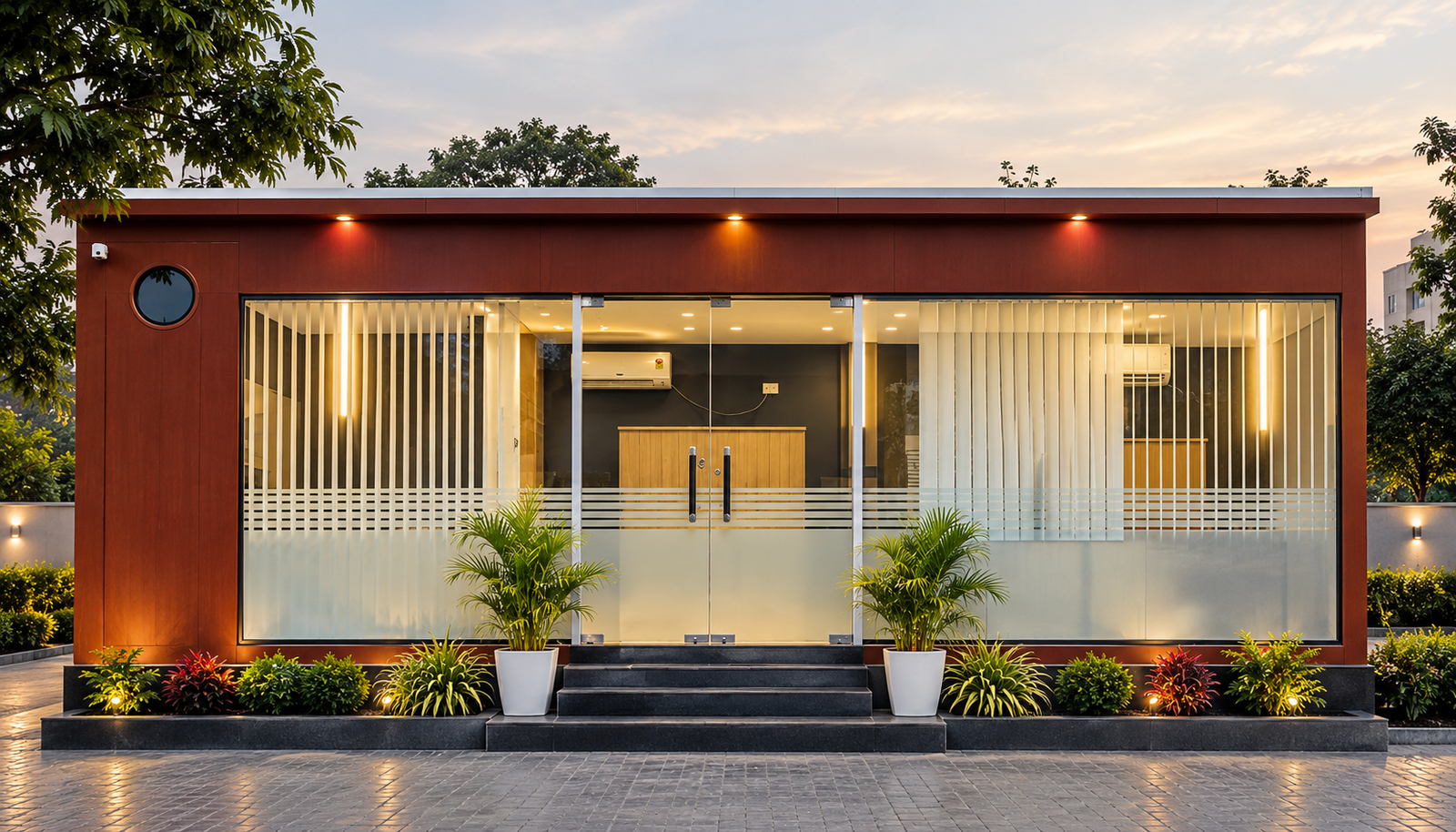
ILLUSTRATIVE FACILITY CONCEPT — PLANNING CONSIDERATIONS ONLY
CUSTOMER LOUNGE & REFRESHMENTS
Dedicated Air-Conditioned Waiting Lounge & Station Administration
☕
Waiting Area
Consider comfortable waiting arrangements appropriate to the facility's design and available space.
🚶
Clear Signage
Use clear directions and instructions to help visitors navigate the site and understand charging procedures.
➡
Convenient Access
Plan entrances, movement areas, and charger access with the intended vehicle categories in mind.
📋
Useful Site Information
Provide relevant information about charging equipment, applicable tariffs, operating hours, and support channels once confirmed.
🛡
Safety-Conscious Planning
Consider appropriate site layout, electrical installation requirements, signage, and applicable safety practices.
🌱
Thoughtful Facilities
Assess which additional amenities are appropriate for the site, user needs, available space, and operating model.
07 / LOOKING AHEAD
Designed With Tomorrow in Mind.
Electric mobility will continue to evolve, bringing changing requirements for charging power, vehicle compatibility, digital services, and site planning.
ZECONEX aims to approach infrastructure development with an understanding of these changing needs, considering opportunities for future development where practical, technically suitable, and commercially viable.
🛣Infrastructure Development
Explore additional charging locations as projects, feasibility, and investment conditions allow.
⚡Evolving Vehicle Requirements
Consider how charging infrastructure may need to adapt as compatible vehicle categories and technologies change.
📱Digital Capabilities
Evaluate digital tools and services that may improve access to charging information and the user experience.
🕑Long-Term Planning
Consider scalability and future requirements during project planning, without compromising the practical needs of the current development.
FUTURE NETWORK HORIZON
CONCEPTUAL FUTURE NETWORK
CONCEPTUAL FUTURE NETWORK — NOT A LIVE NETWORK MAP:
Specific expansion locations and timelines will be announced following verified statutory and commercial agreements.
ZECONEX's charging-solutions framework covers DC fast charging for cars, two-wheeler charging, three-wheeler charging, multi-vehicle charging infrastructure, digital charging and payment considerations, customer amenities, and future infrastructure development.
The available project documentation describes a proposed total charging capacity of 204 kW, comprising a 120 kW DC charger and a 60 kW DC charger for four-wheelers, along with four 6 kW DC chargers intended for two- and three-wheelers combined.
The current operational status must be confirmed directly with ZECONEX. The project information available for this website describes the facility as a proposed project. Please contact the company for verified updates.
No. Compatibility depends on the vehicle, supported charging method, connector, and equipment specifications. Drivers should verify compatibility before using a charging facility.
Payment options depend on the systems implemented at the relevant facility. Contact ZECONEX for confirmed information about payment methods.
Customer amenities depend on the design and implementation of each facility. Specific amenities should be confirmed for the relevant location.
ZECONEX's longer-term infrastructure vision considers future development opportunities. Specific locations and expansion schedules should not be assumed unless officially announced.
Interested businesses can contact ZECONEX to discuss potential projects and collaboration opportunities.
COLLABORATE WITH ZECONEX
Have a Charging Infrastructure Project in Mind?
Whether you're exploring a potential location, evaluating infrastructure requirements, or considering a collaboration, start a conversation with ZECONEX.